FR - EN

DESIGN VOICE : GARNIER & LINKER

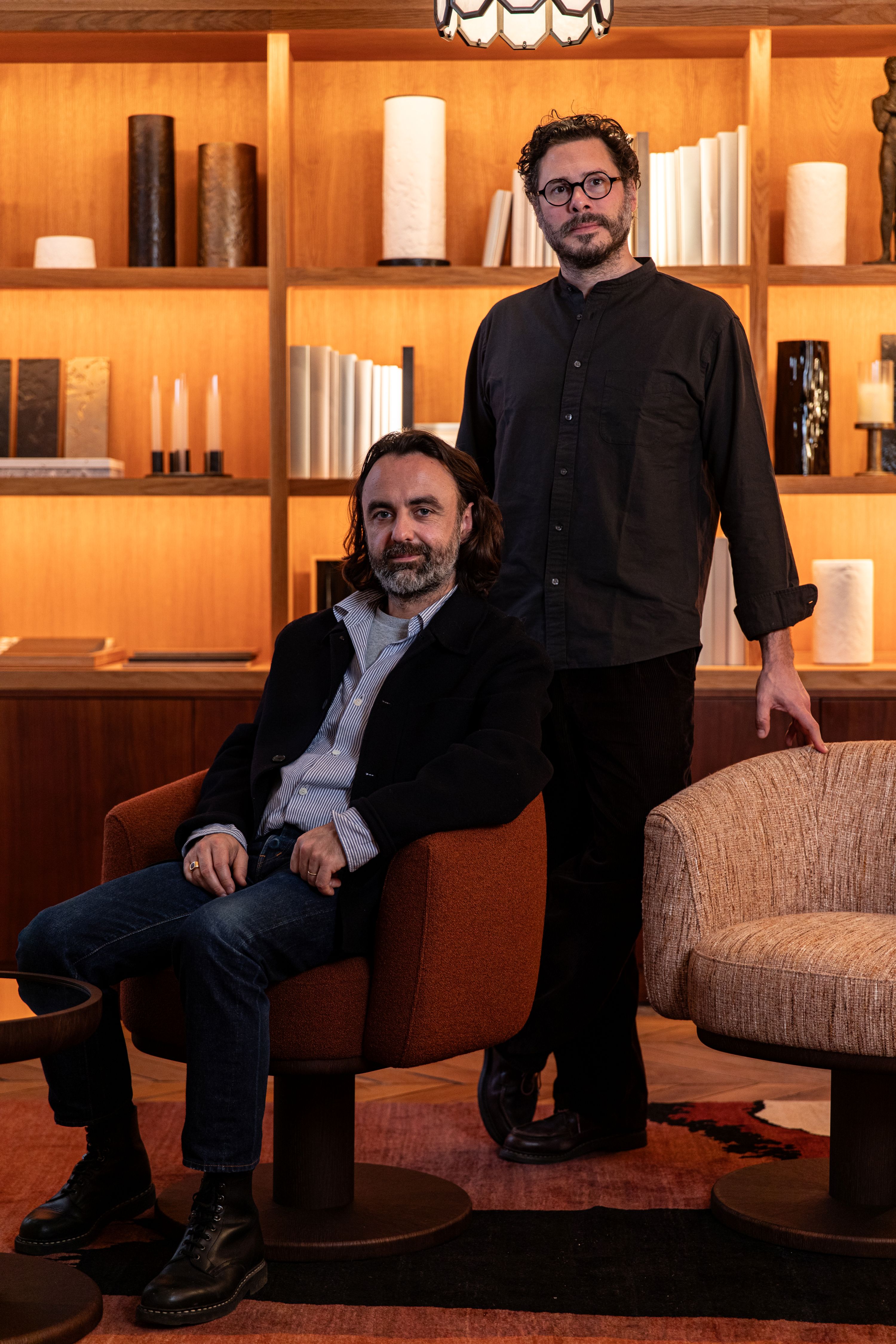
In the hushed quiet of the workshop, where material still precedes form, Guillaume Garnier and Florent Linker engage in a dialogue in two voices. Their
language, both restrained and precise, unfolds in a subtle tension between heritage and transformation,between structural rigor and the softness of line.

IN CONVERSATION WITH Garnier & Linker

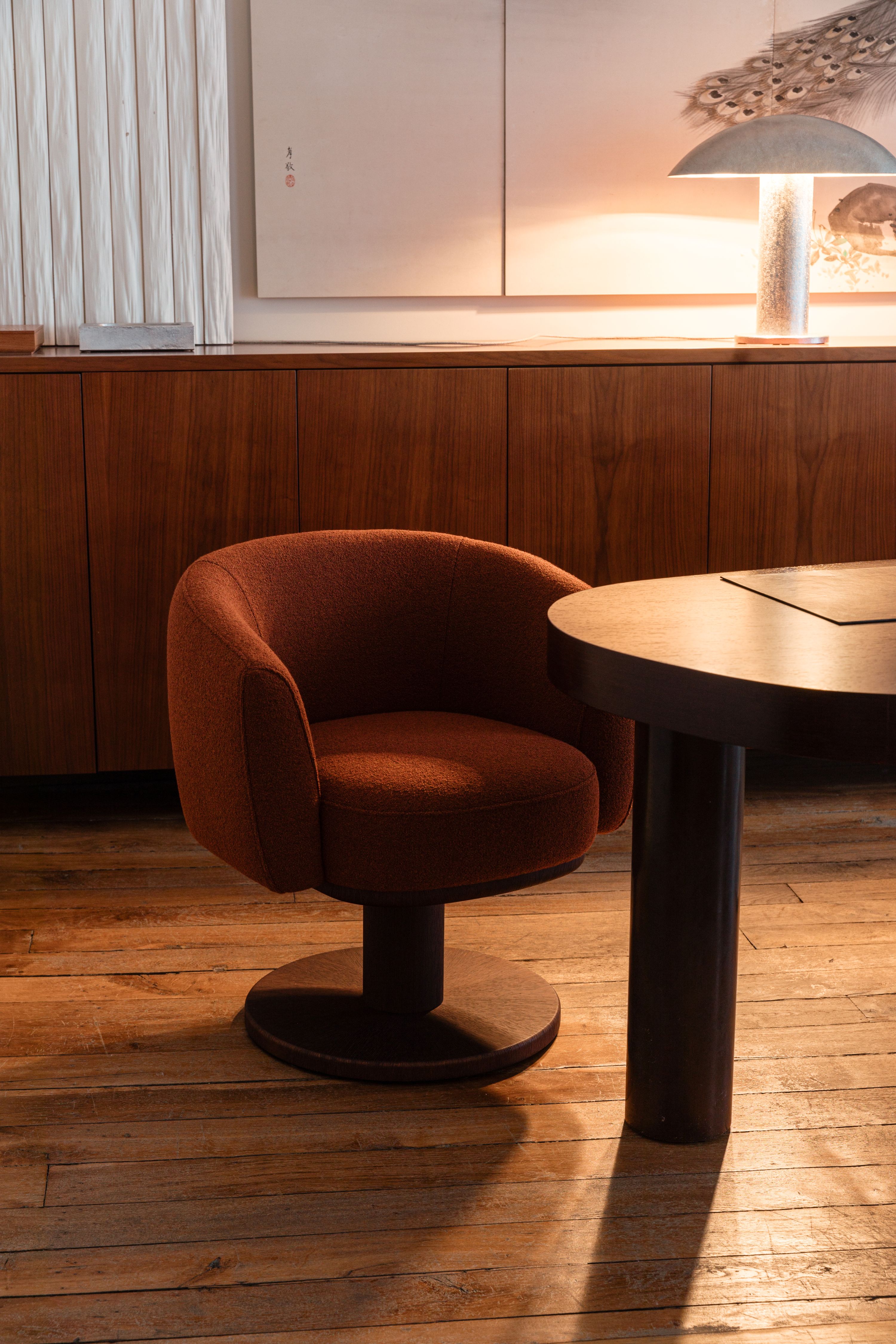
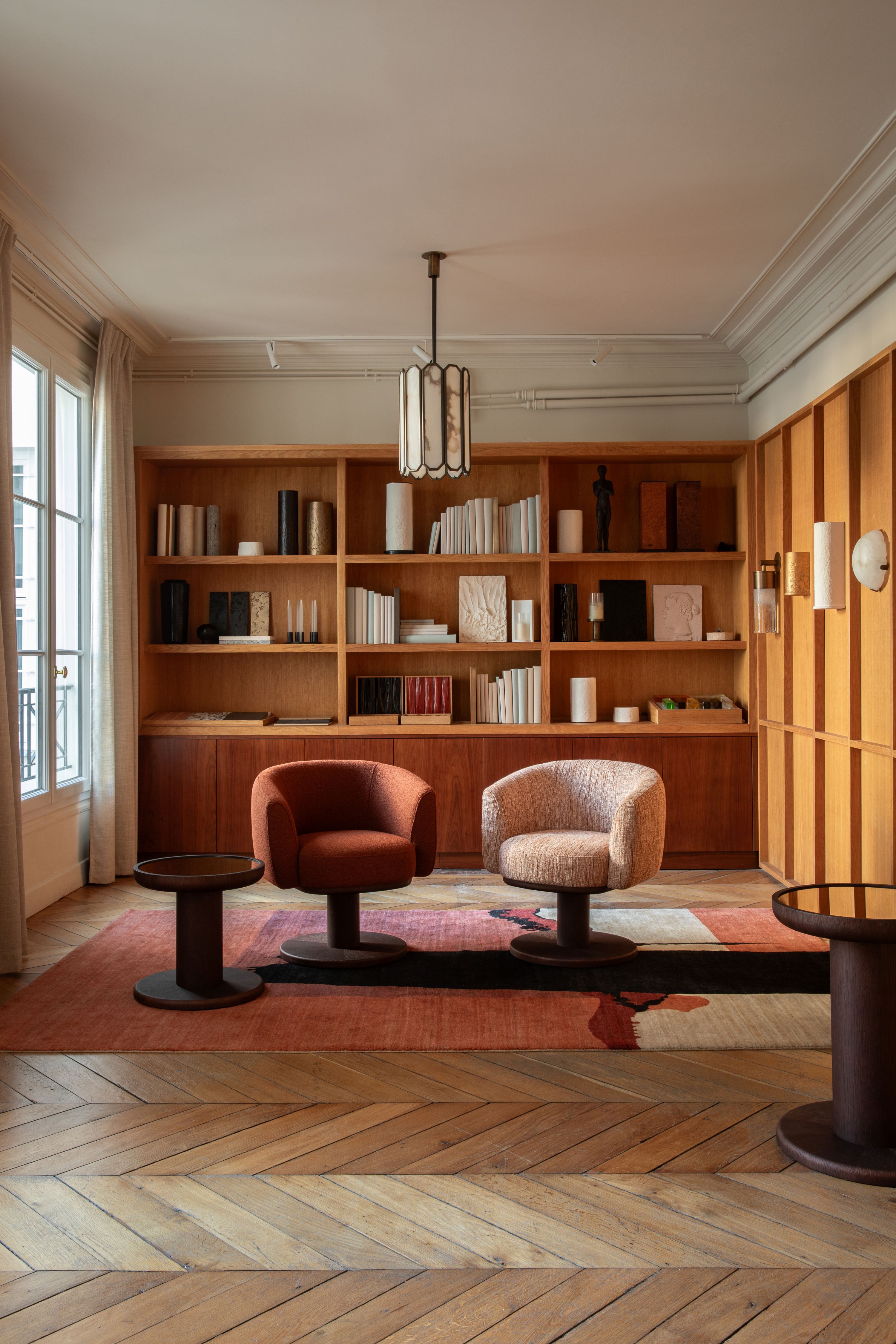
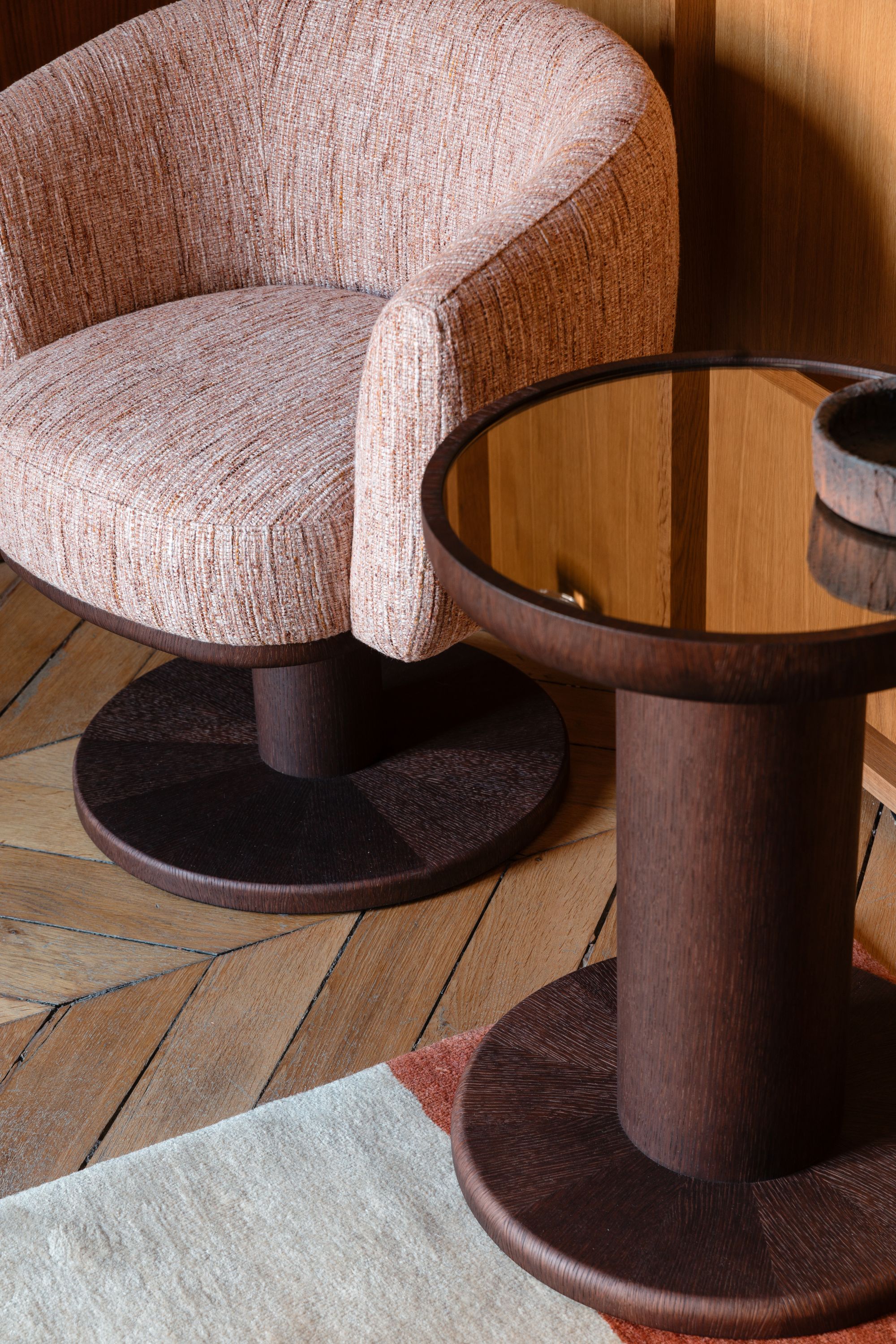
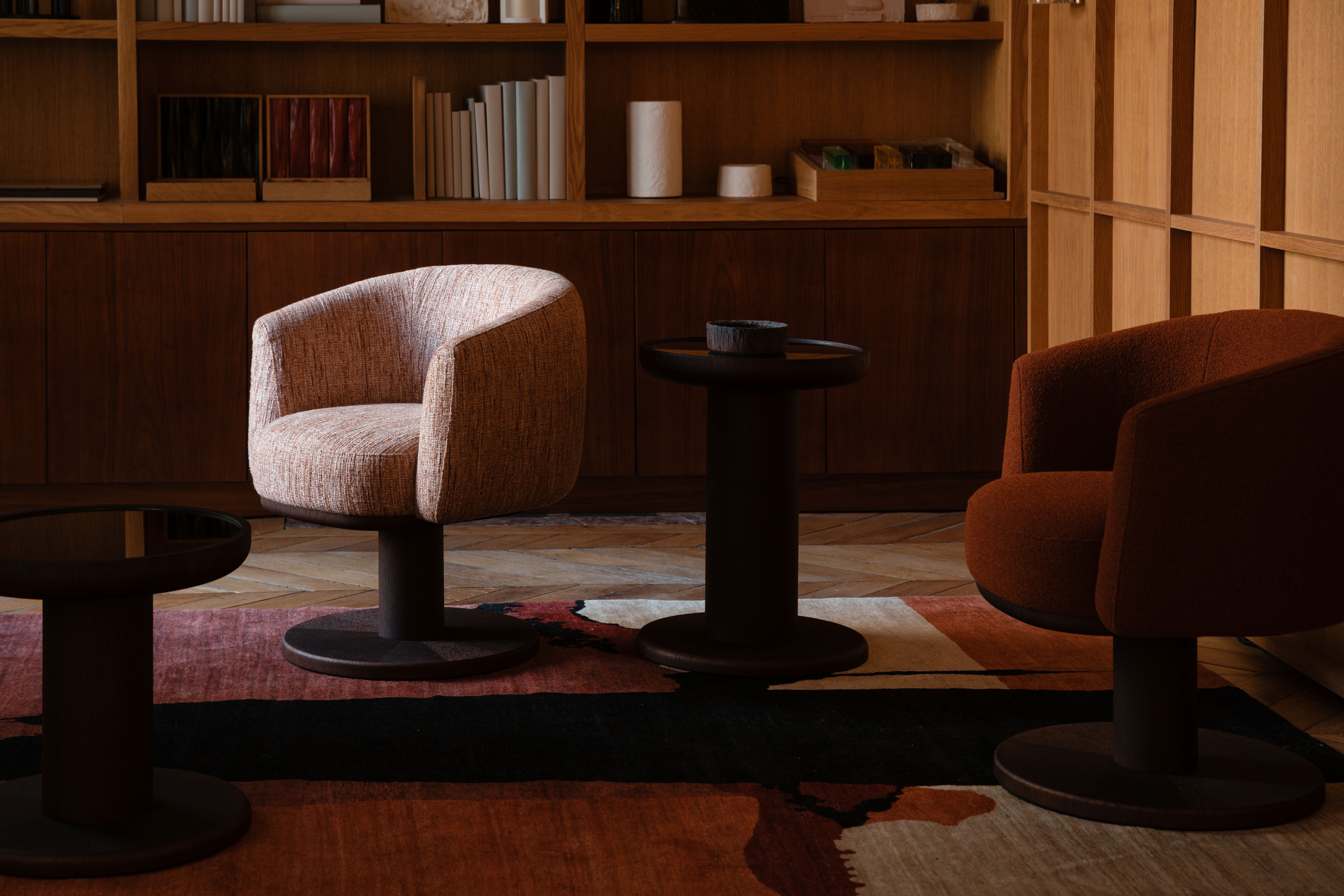
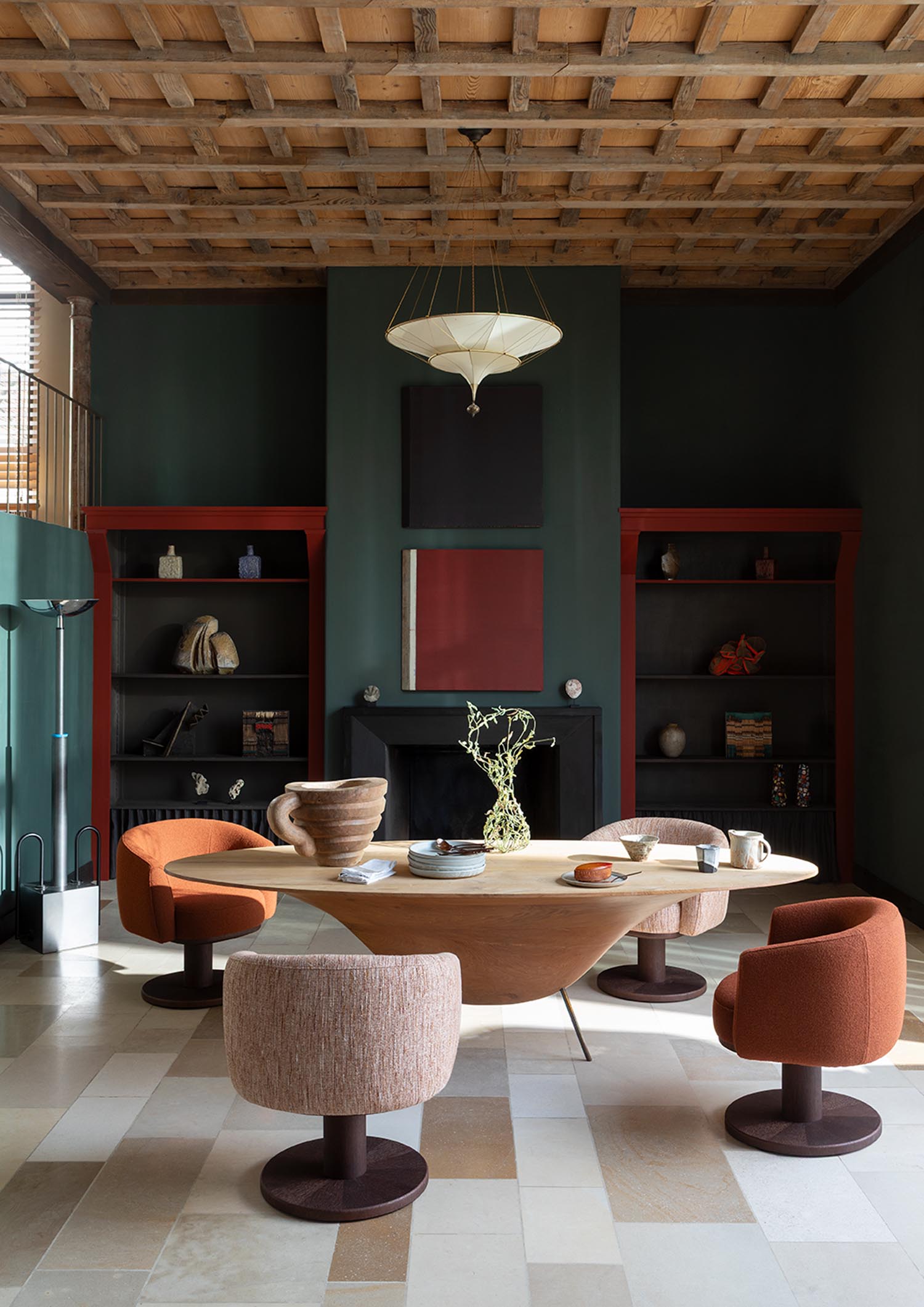
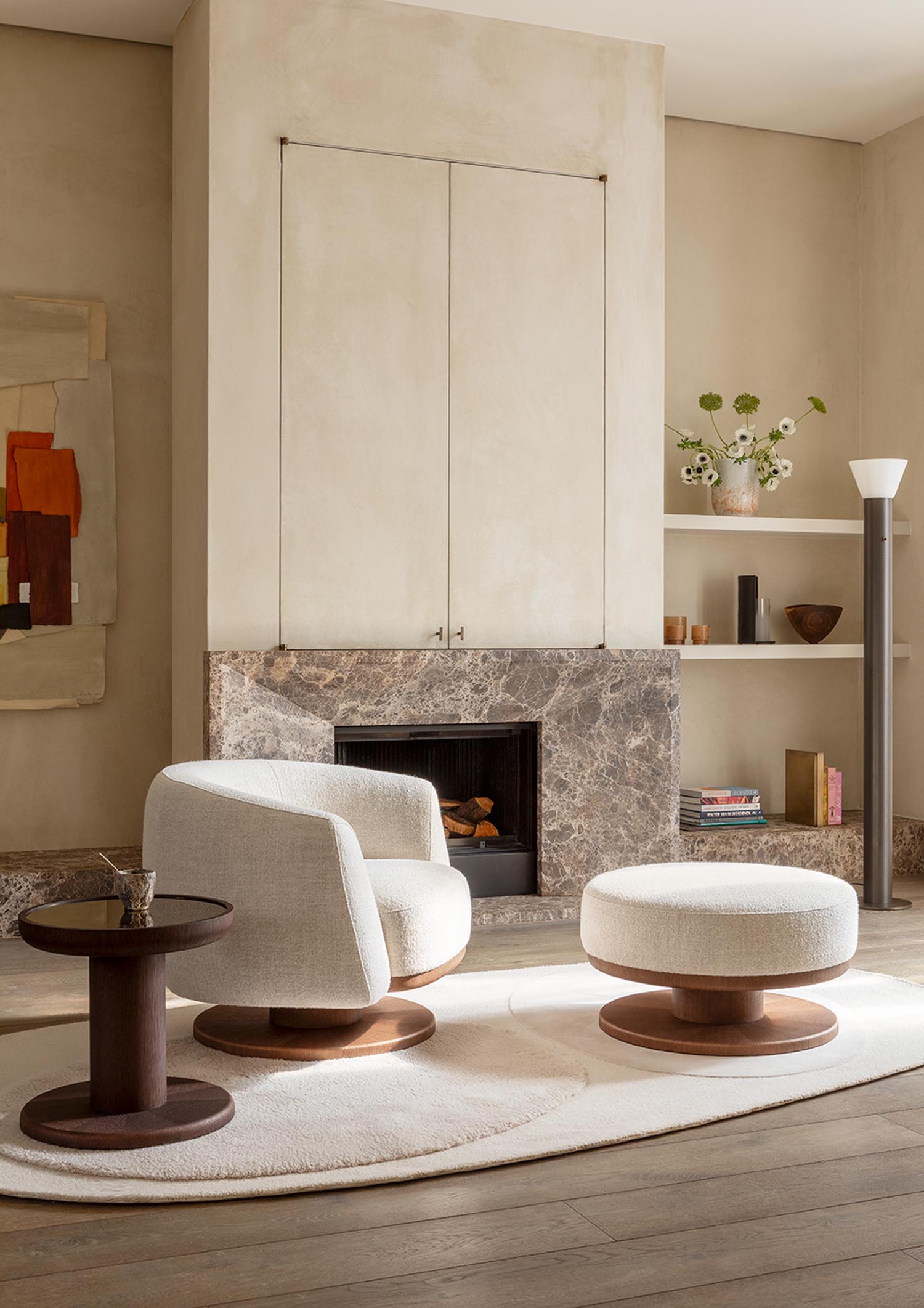
With VESTA, created for Maison Pierre Frey, they extend this pursuit of balance: a collection conceived as an open composition, where wood and textile resonate
with one another, and each piece finds its place without ever asserting itself. More than a design, it is a quiet, enveloping presence, almost self-evident.

How have your respective paths and your shared background in interior architecture shaped this dual voice? How did your balance emerge?

G.G.: Although we now work at the scale of objects, our training in interior architecture remains fundamental. It continues to shape the way we think about each piece, always in relation to space and real use. Our collaboration is very fluid. We each develop ideas independently, then bring them together, confront them, and refine them as a pair. There is a constant back-and-forth, almost instinctive. An idea may originate with one of us, be taken up by the other, and evolve. It is an ongoing, very natural exchange.

Does your creative process begin with drawing or with material?

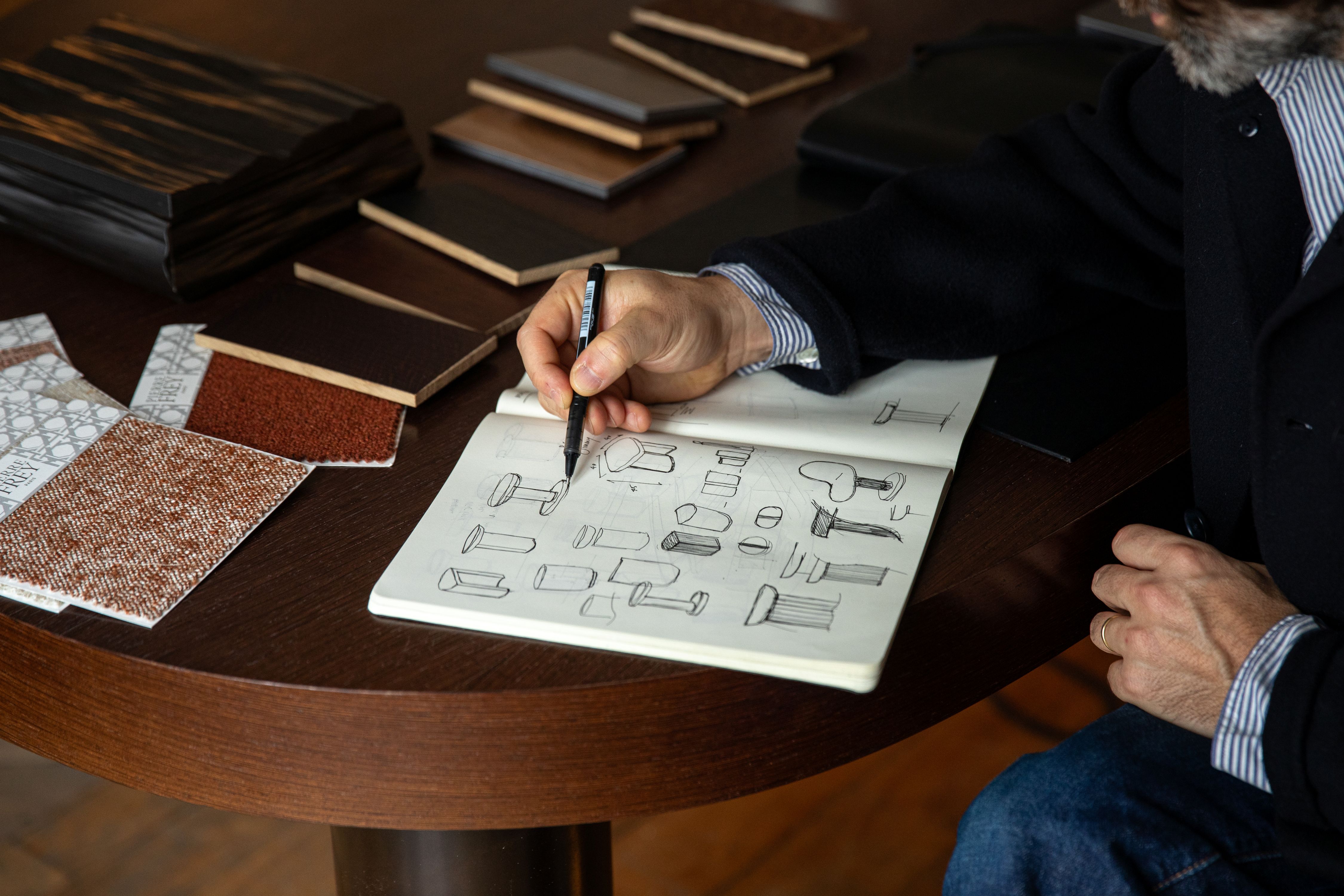
G.G.: The two are inseparable. Drawing is often the starting point, sometimes reduced to its bare minimum, almost just an intention. But very quickly, we need to move into volume. We work extensively through models or directly with materials in the studio. There is a constant dialogue between drawing and volume, between idea and form. It is in this back-and-forth that a project finds its balance.

Your work draws on a strong artisanal lineage while asserting a contemporary voice. How do you navigate the meeting point between heritage and modernity?

G.G.: Our work lies at the intersection of craftsmanship, sometimes centuries, even millennia old, and our own contemporary perspective. We try to bring the two as close together as possible. It all begins with understanding the techniques. We spend a great deal of time in workshops, observing and learning, without necessarily producing right away. It is about grasping both the constraints and the often untapped potential of these skills. From there, our role is to introduce a contemporary perspective, to subtly shift these techniques and give them a new expression.


F.L.: We also always consider objects in relation to interior architecture. They need to be functional, but also open enough to integrate into very different environments, sometimes richly layered, sometimes extremely pared back. What interests us is precisely how they are reinterpreted from one project to another.

Are there works, periods, or gestures from the decorative arts or sculpture that inform your imagination, even indirectly?

G.G.: Our references lie between two poles. On one side, the decorative arts, particularly the Art Deco period, for its relationship to materials and its exacting standards of craftsmanship. Figures such as Jean-Michel Frank and Pierre Chareau resonate strongly with us, both for their material approach and for their holistic vision of creation, closely tied to making. Jean-Michel Frank, for instance, worked with his own production workshop, developing projects at full scale. That approach speaks to us deeply, even if we do not go so far as to design entire décors for our clients. On the other side, there is sculpture, particularly a certain strand of 20th century abstraction. Artists such as Roni Horn and Hans Josephsohn inspire us through their almost minimal approach to form, always in service of the material. Our work often sits between these two directions, sometimes leaning more toward one, sometimes the other, but always navigating between them.

How do you reveal the material without overloading it, allowing it to speak without constraining it through design?

G.G.: By simplifying the design. The stronger the material, the more essential it is not to overload it. We aim for very pure forms that allow the material to fully express itself. Design should accompany, never dominate. It is a delicate balance, but a fundamental one in our approach.

What does durability mean to you personally? Is it a matter of material, design, use, or desire?

G.G.: We approach durability on several levels. First, in very concrete terms, these are pieces designed to last, both through their craftsmanship and the materials used. They are made to endure, likely beyond us, and to develop a patina over time without ever losing their relevance. In that sense, they have no expiration date. There is also a more fundamental, almost personal pursuit, that of timelessness. We try to draw lines that escape trends, sometimes with a certain form of classicism, which, for us, is not negative. The aim is neither to follow trends nor to provoke them, but to create pieces that can endure over time. They may be more or less desired depending on the moment, then return, be rediscovered in a new light. That, for us, is one of the essential foundations of durability.


F.L.: And of course, there are the materials and craftsmanship. Some materials, such as bronze or pâte de verre, are almost inherently unalterable.

In the VESTA line, oak plays a central role. What does this material represent for you?

F.L.: It is a material we use regularly. It is locally available, widely mastered, and offers a remarkable range of possibilities. It is also timeless. It can be worked in many different ways, stained, transformed, adapted. It is a solid foundation, both literally and figuratively.

How did your collaboration with Maison Pierre Frey begin? What created an immediate connection between your worlds?

G.G.: We were already familiar with the house, particularly through the architects we collaborate with. There was a shared sensibility. When the opportunity arose, it felt like an obvious fit. The craftsmanship, the level of excellence, the shared sensitivity, everything aligned naturally.

At what point did you feel that this line naturally belonged within the Maison Pierre Frey universe?

F.L.: Visiting the workshops was a turning point. It allowed us to project ourselves very concretely into the collaboration. We had done little work on seating, especially upholstered seating, so it was both new territory and a natural extension. The exchange developed gradually, almost organically. We already knew each other, shared clients, geographical proximity, and common sensibilities. When the collaboration was proposed, it felt like a continuation.


G.G.: The starting point was quite clear, to respond to typologies that were missing from their collection. Beyond that, we were given great creative freedom. Because we already knew their workshops, we understood which skills could be activated and how to make them resonate with our own language. The real challenge was to find the right balance between their highly refined techniques and our way of designing objects.

How did the dialogue with the teams and workshops unfold? What did this collective process bring to the final design?

G.G.: The development was closely carried out with the house’s teams, both design and technical. We quickly moved into very concrete questions, veneer work, rotating seat mechanisms, comfort requirements. The collection grew from a simple intuition, a central volume, often treated in metal in this type of furniture, which we chose to reinterpret in wood. From that principle, we developed a family of seating and tables. The dialogue with the workshops allowed us to refine, adjust, and sometimes rethink certain elements. But the core remained very faithful to the initial intention, which is always a good sign.


F.L.: We worked extensively on details. That is where Pierre Frey’s expertise was invaluable, particularly on seating, which we explore less. We were looking for a certain tension in the lines, without tipping into rigidity. Achieving that balance requires real technical mastery. Their experience allowed us to go further, with a level of precision we might not have reached alone.

Did you conceive this family of pieces as a cohesive whole or as independent elements?

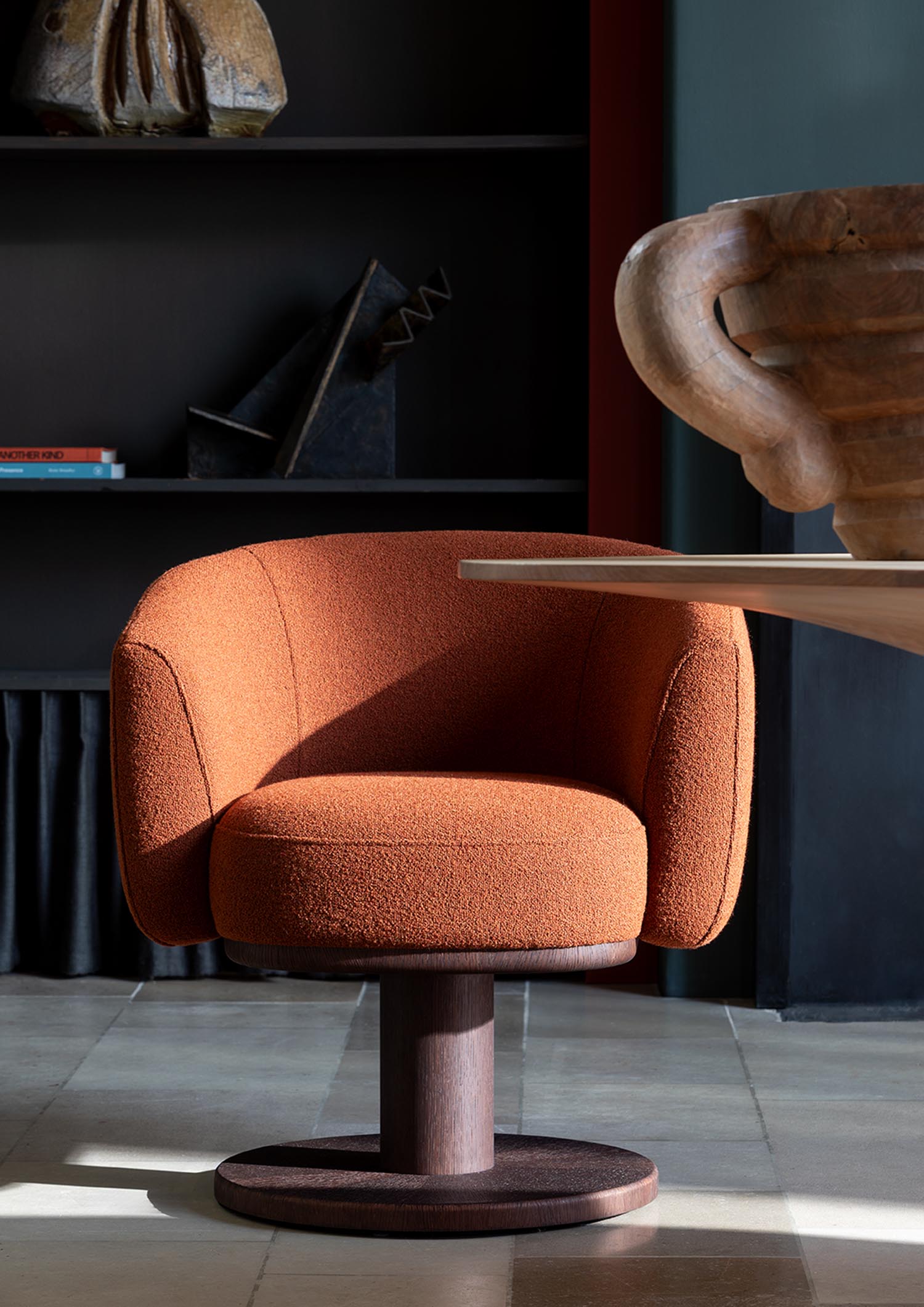
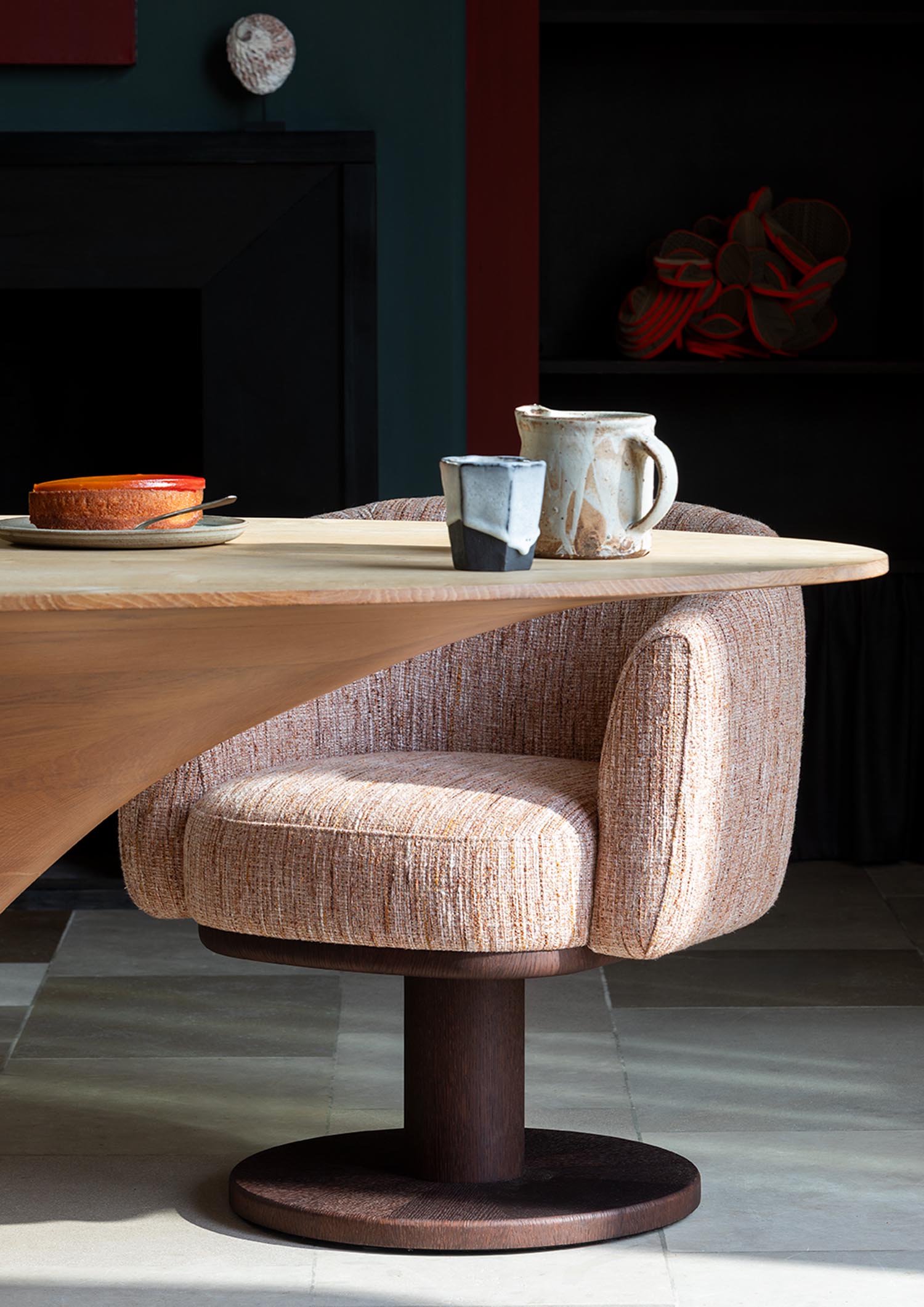
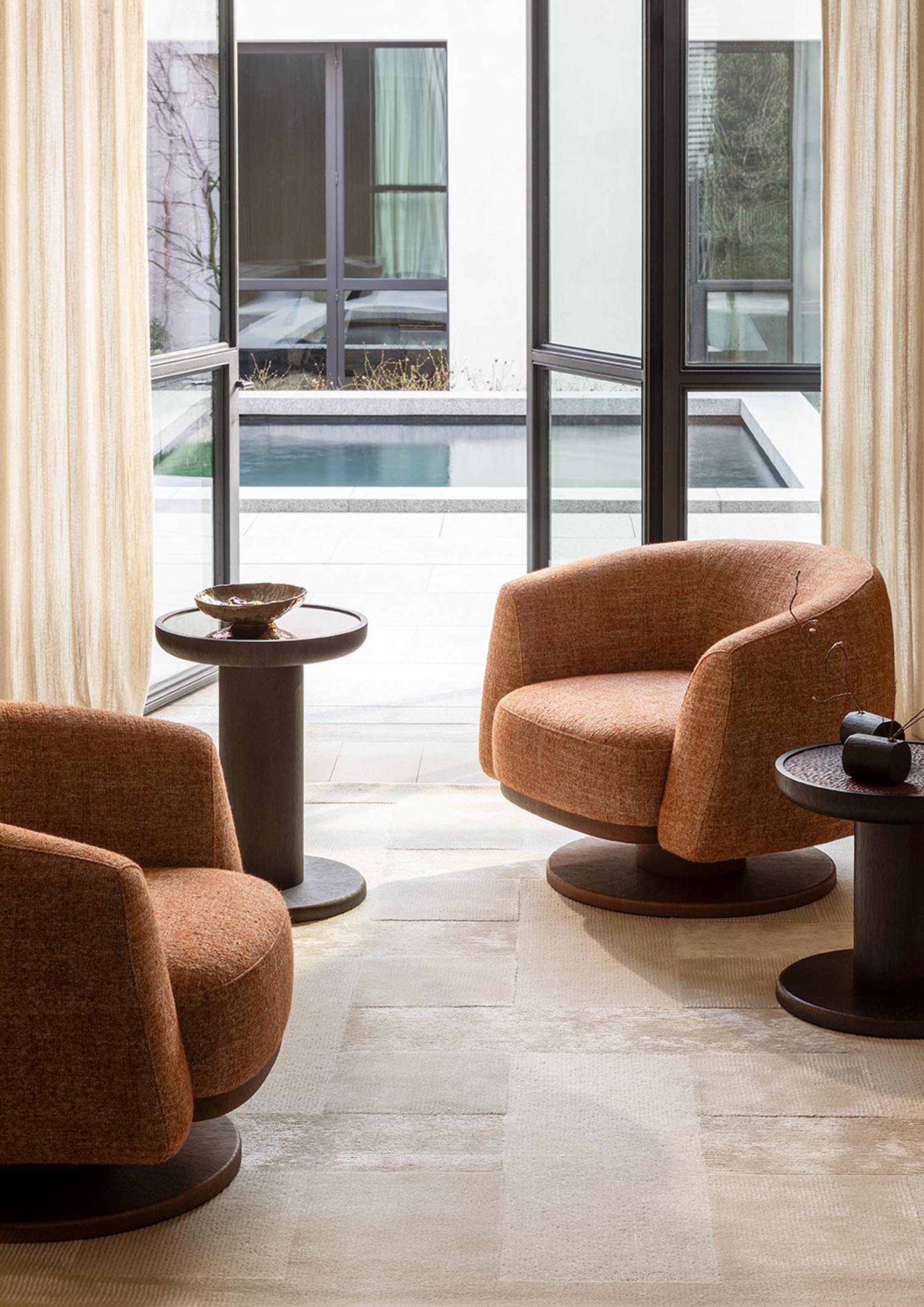
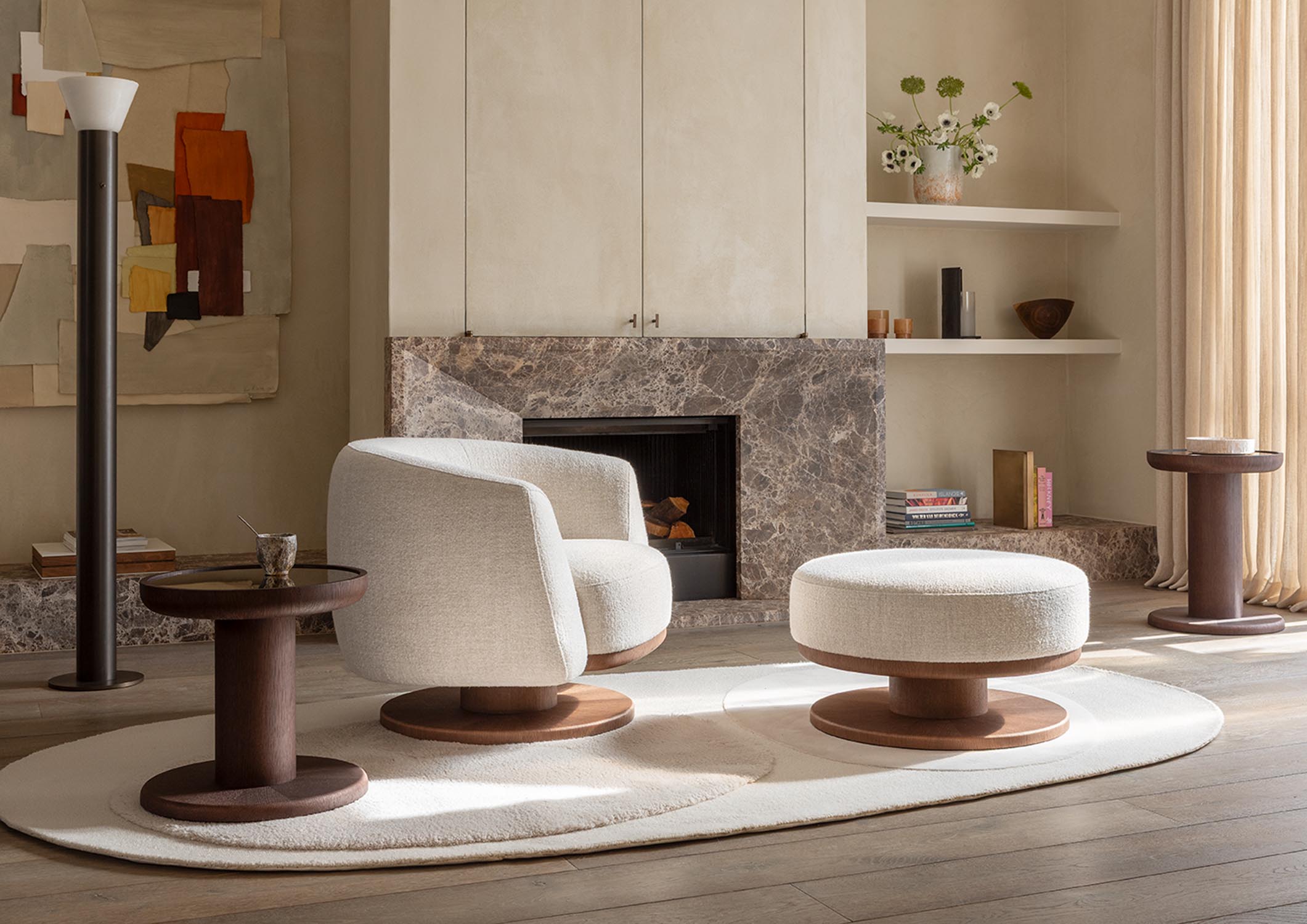
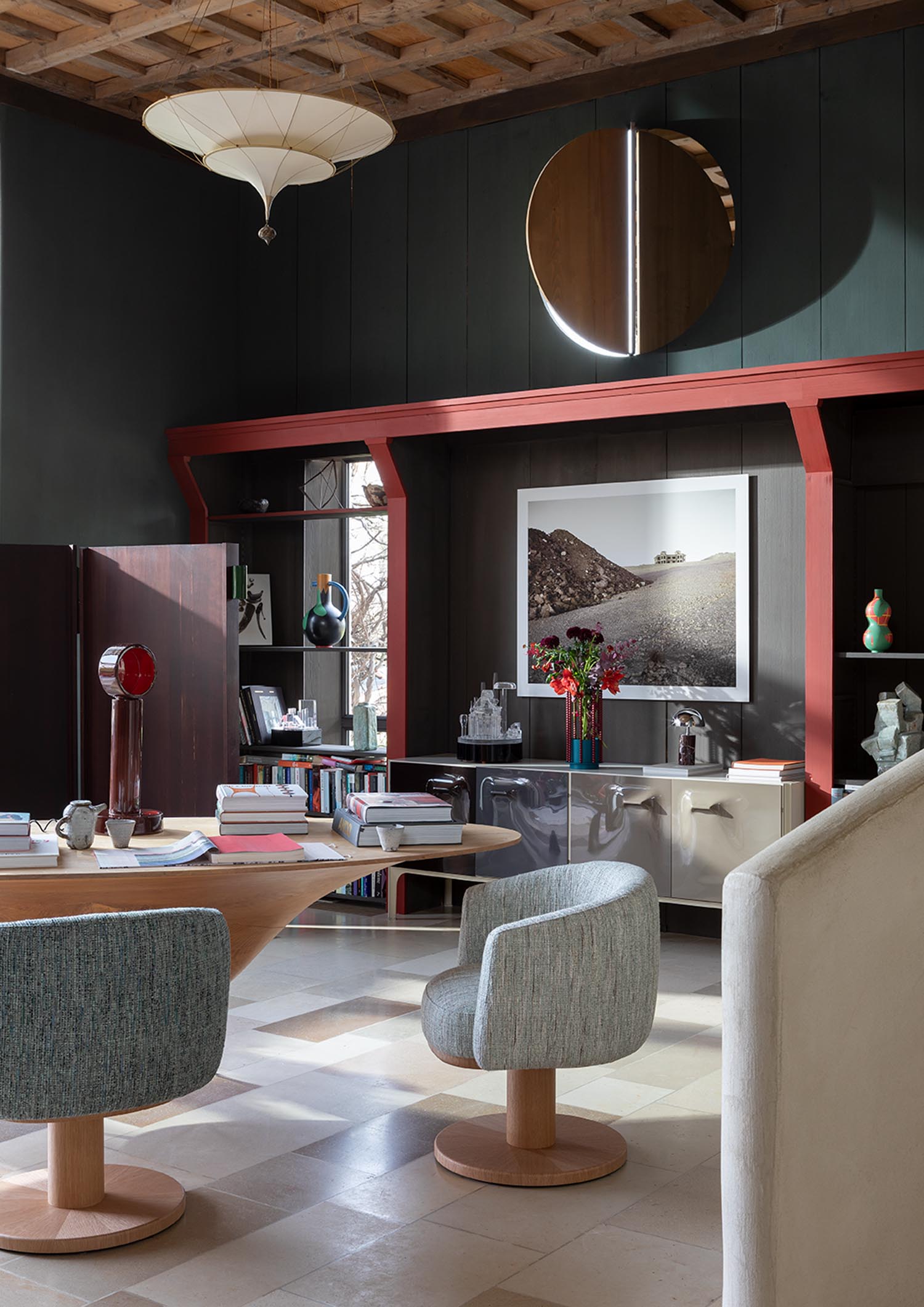
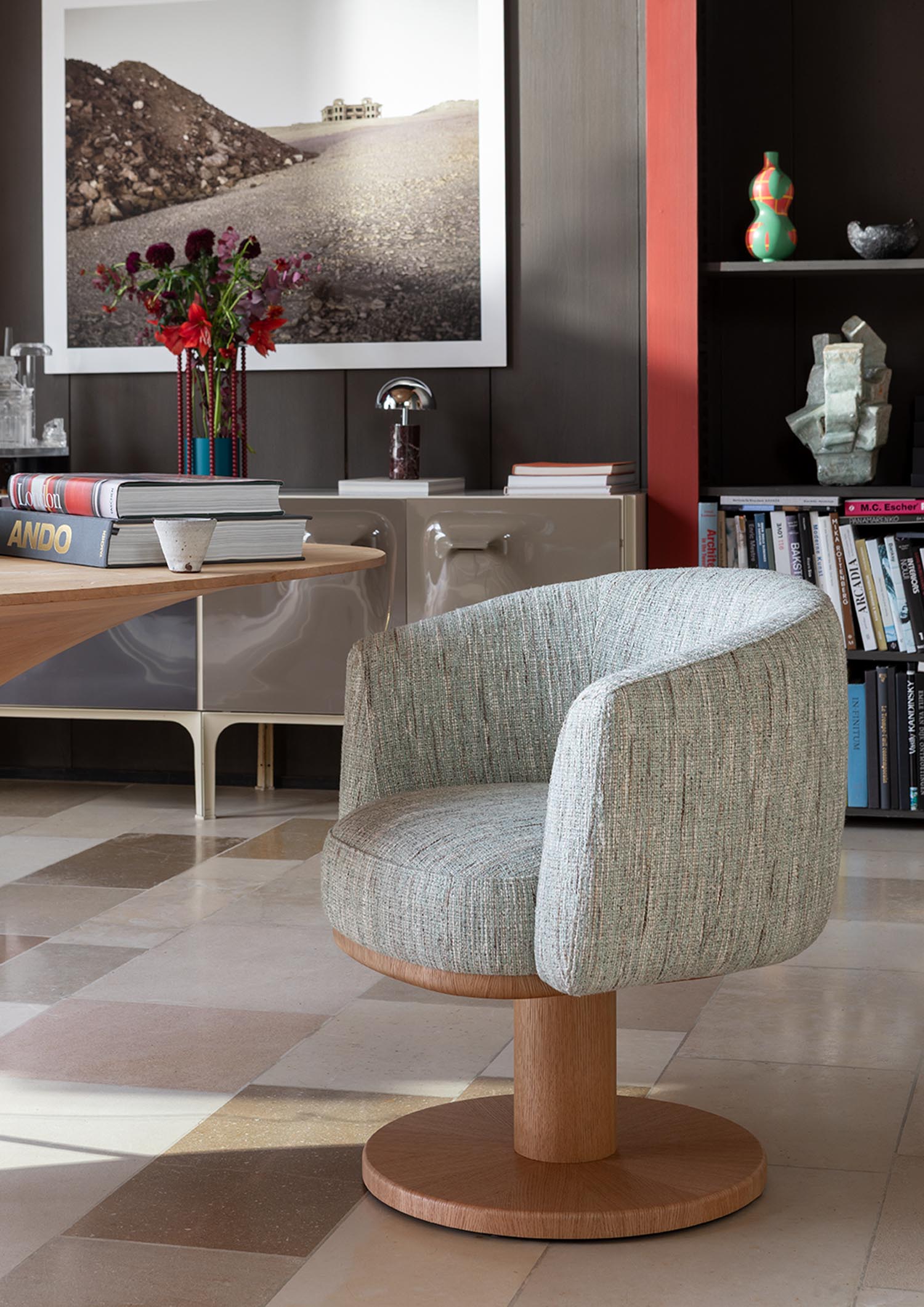
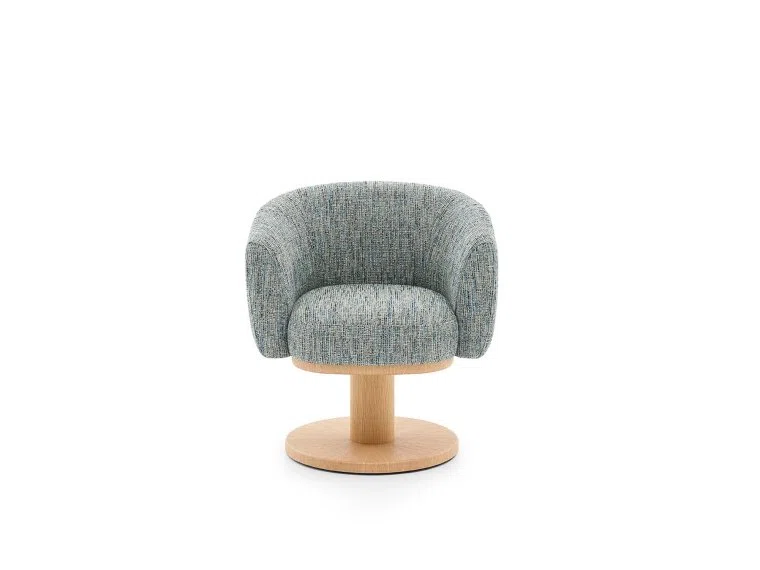
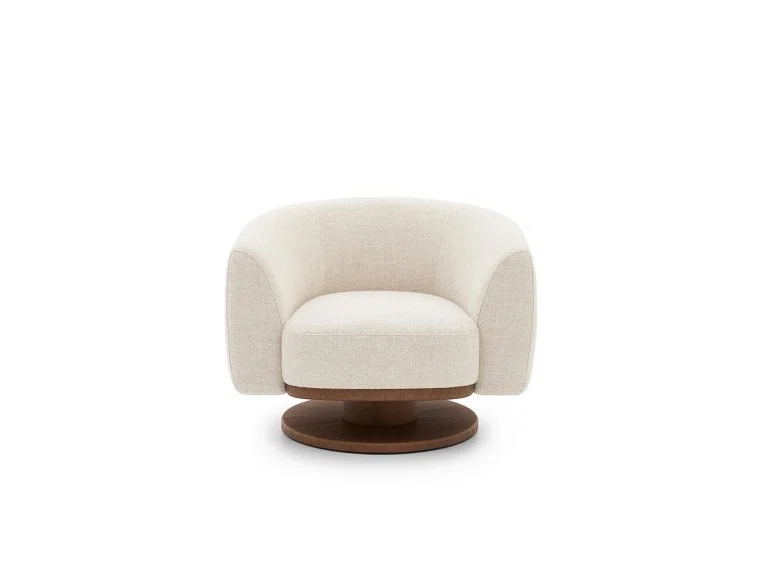
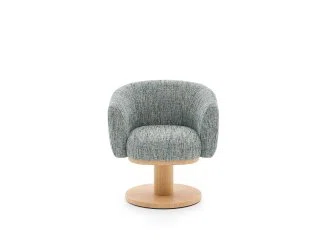
F.L.: We designed an enveloping chair intended for use around a large table, with the idea that one could sit comfortably for extended periods. The lounge chair and armchair were conceived more for living spaces, with a freer use. In extension, we developed side tables and pedestal tables in relation to these pieces. But the collection was never conceived as a fixed system. Each piece can stand on its own. It is not necessary to bring everything together. A chair may sit naturally around a table, but can just as easily work at a desk. What mattered most was comfort, the ability to settle into the seating over time, whatever the context.


G.G.: It was always about a collection without constraint. A freedom of use.

By working on upholstered seating with Maison Pierre Frey, what shifted in your approach? And how did the dialogue between wood and textile develop?

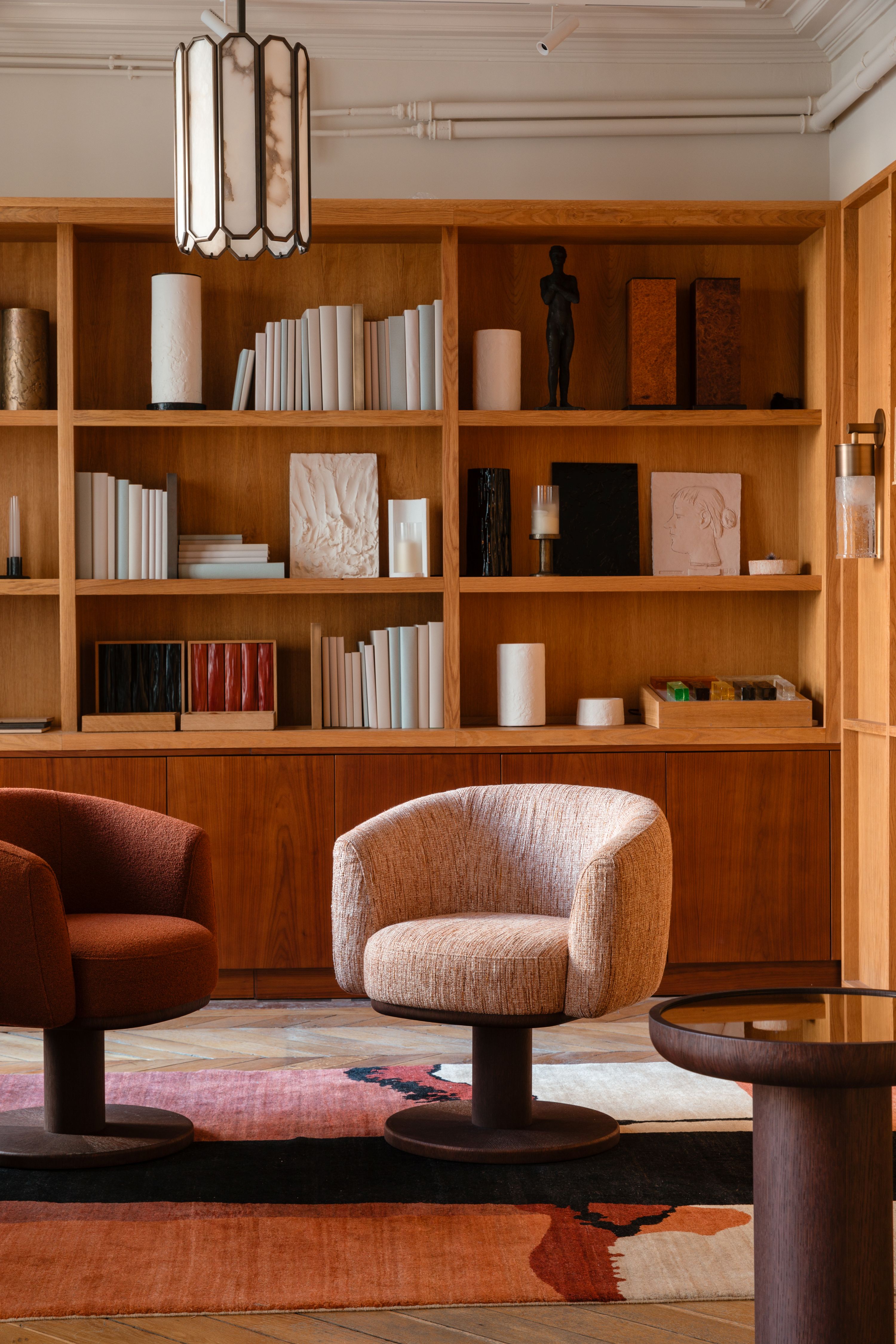
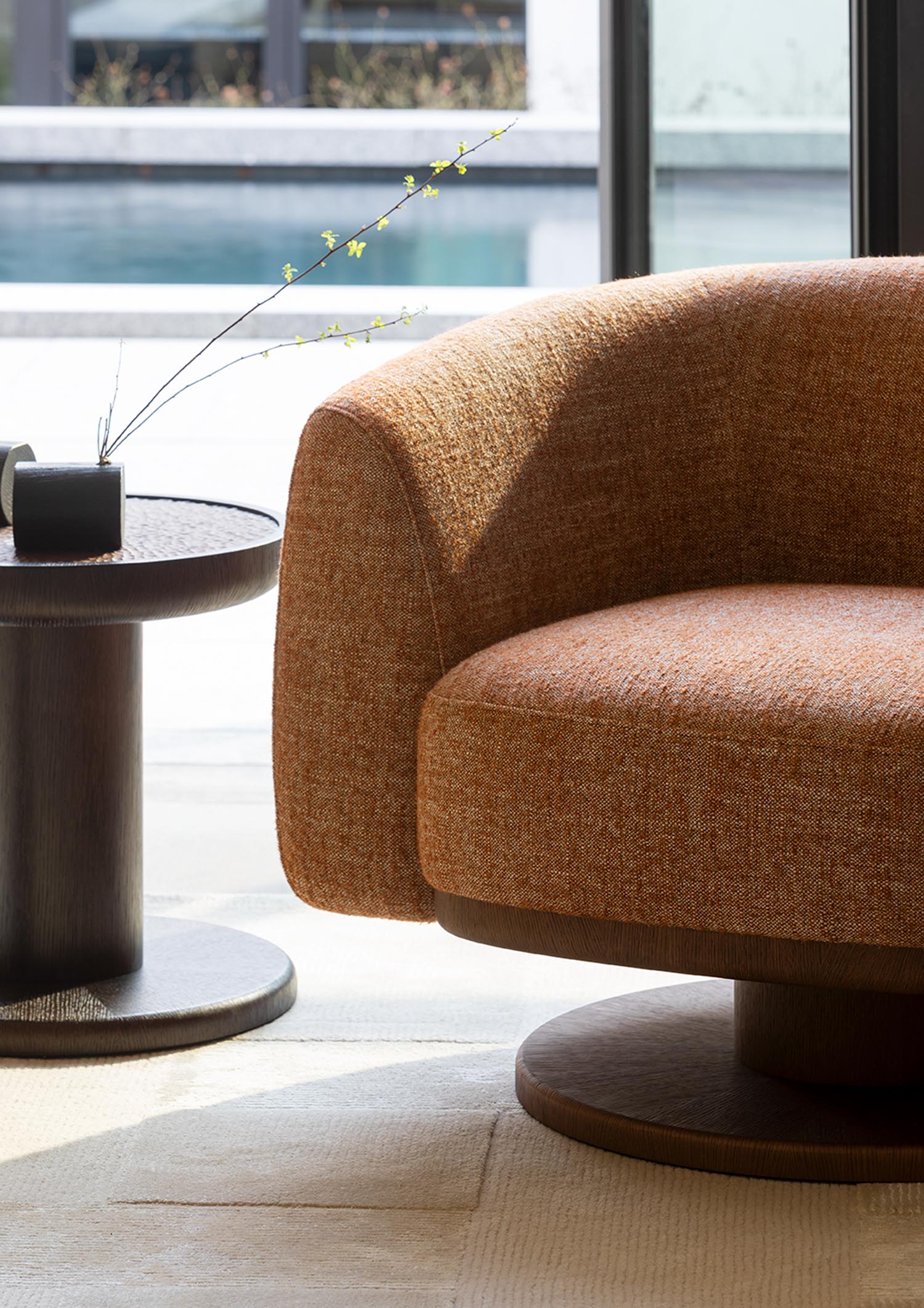
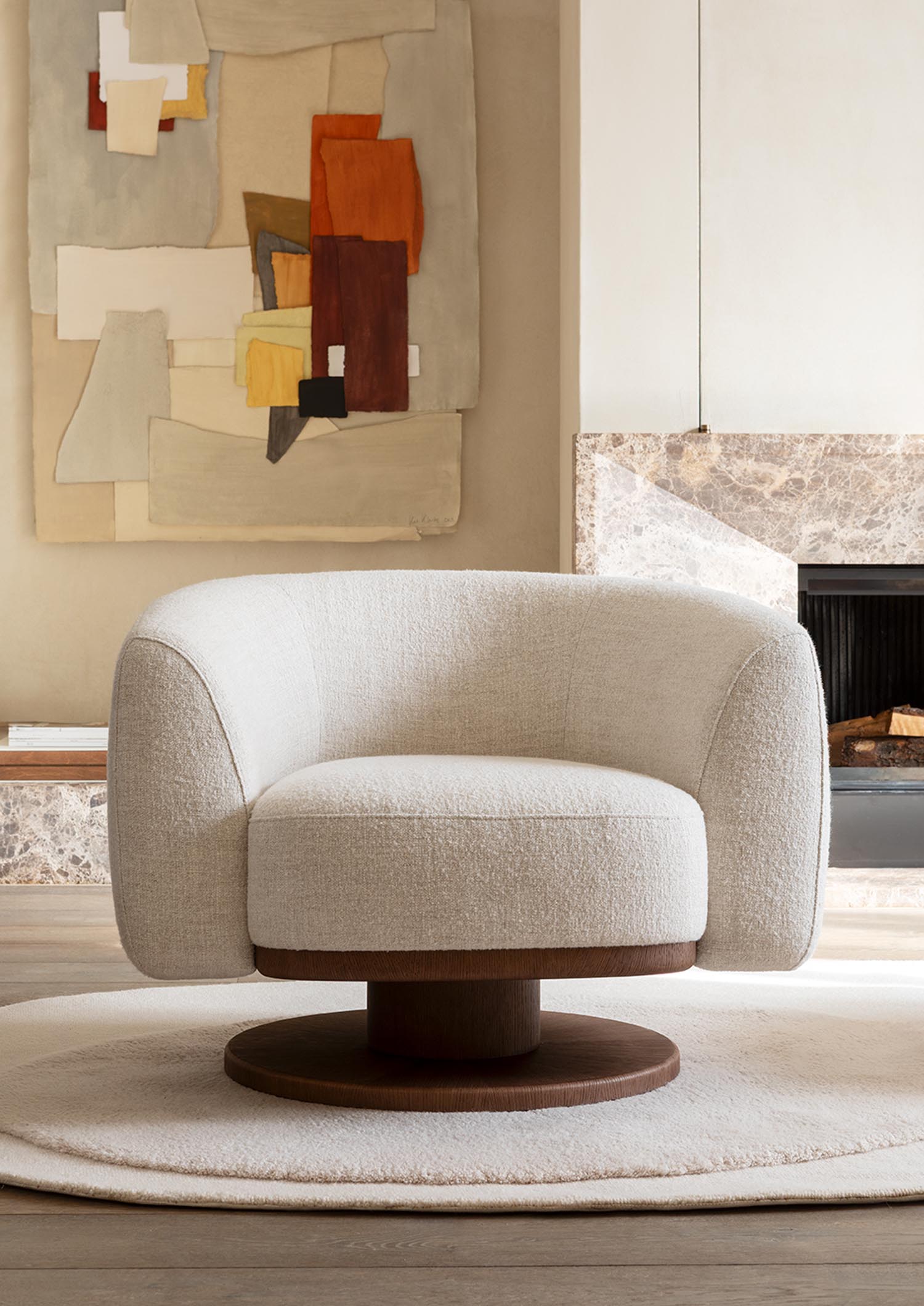
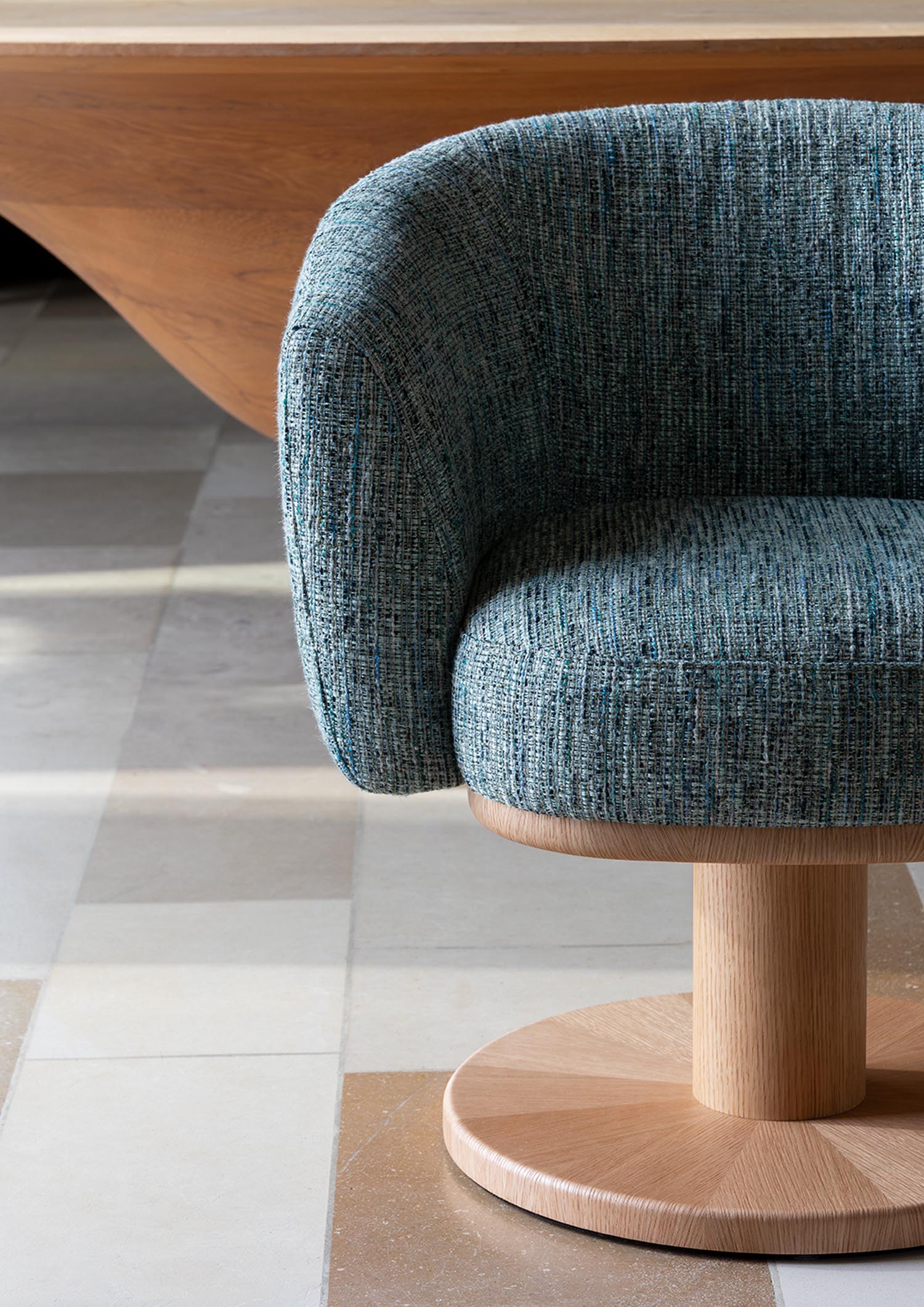
F.L.: Yes, particularly with upholstered seating, which we had explored very little. It was new and demanding territory, leading us to experiment with unfamiliar techniques, especially around curved forms and veneer. Even wood, something we know well, revealed itself differently. Very quickly, the dialogue between wood and textile became central, a play of materials and volumes carried throughout the collection, with a strong continuity of language. The rotating element also allows the pieces to be experienced from multiple angles, enriching their use.


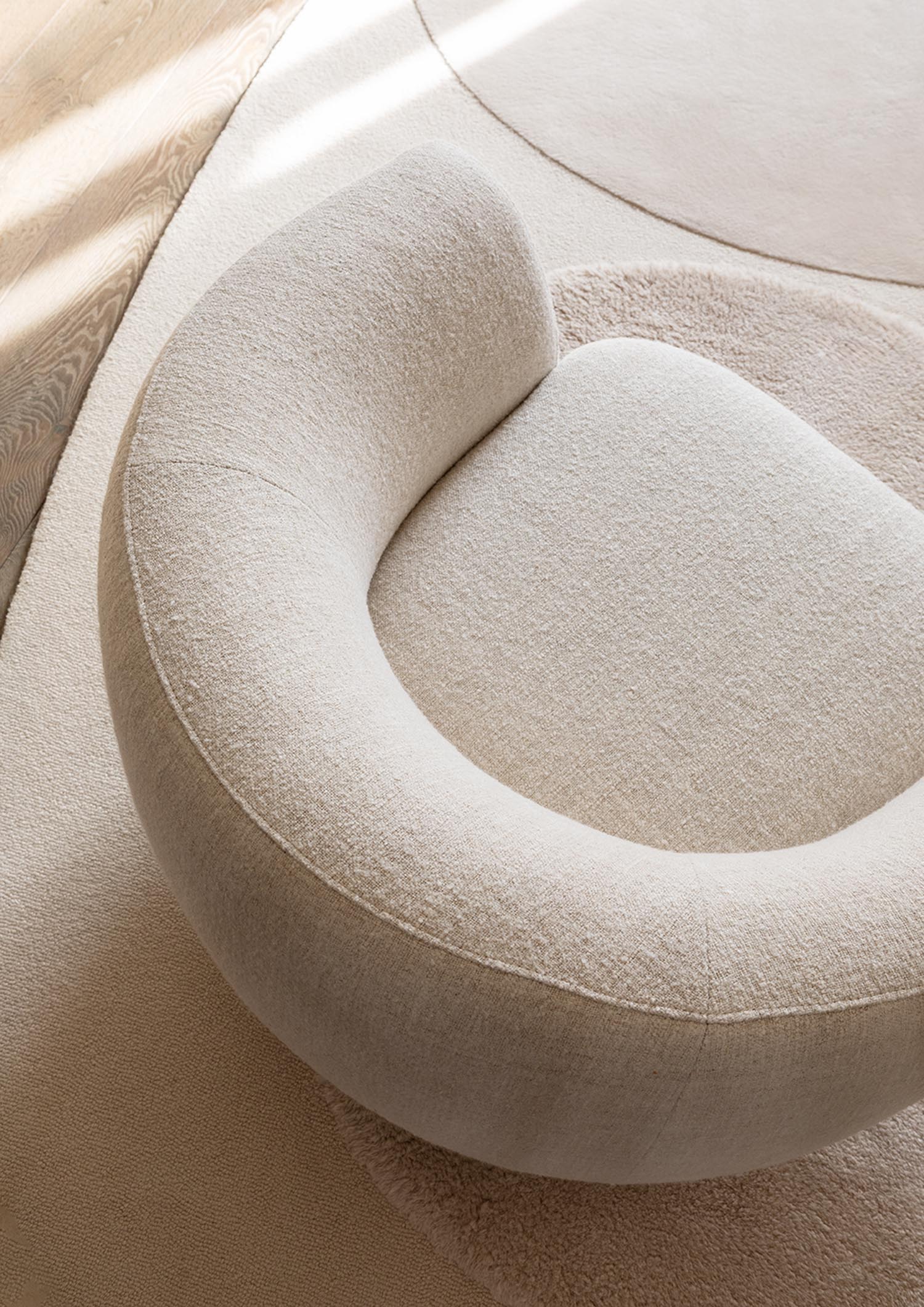
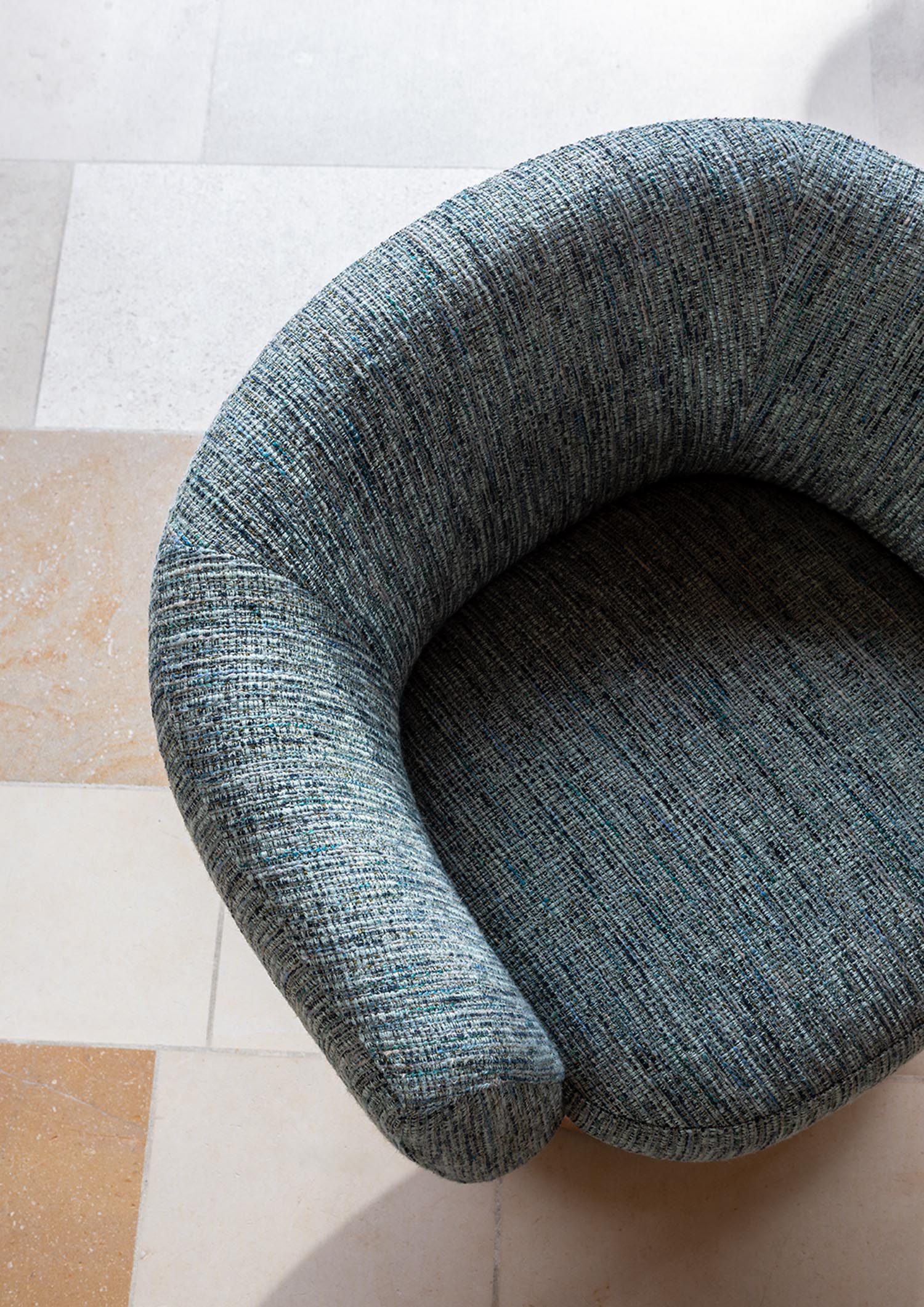
G.G.: For the textile, we started with simple intentions, comfort, precision in detail, and material accuracy. By exploring the Pierre Frey collections, we sought a subtle balance, taut fabrics without stiffness, soft forms without slackness. Each choice was made to support the design, never to overshadow it. The dialogue with the teams was essential in refining every detail and achieving overall coherence.

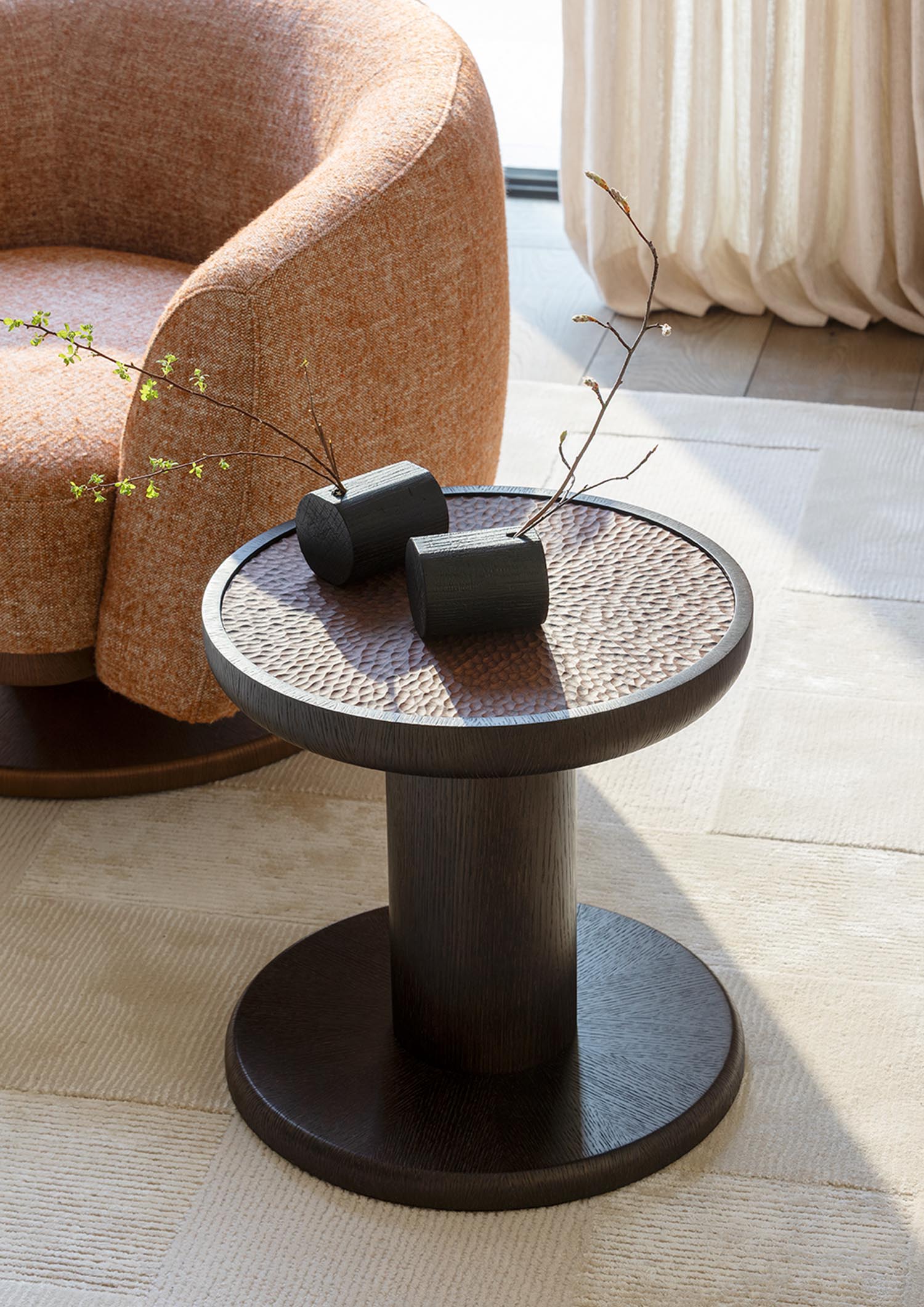
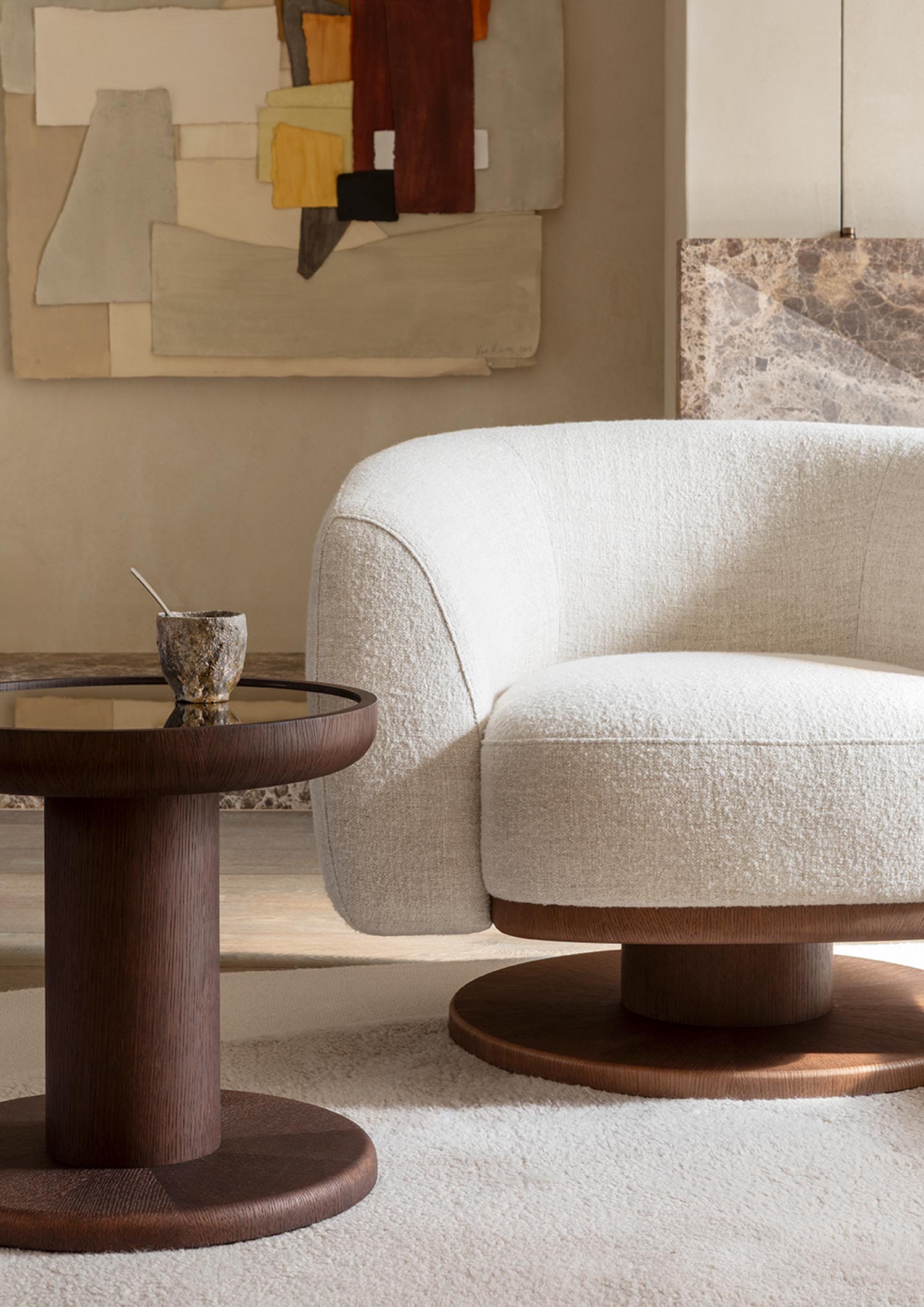
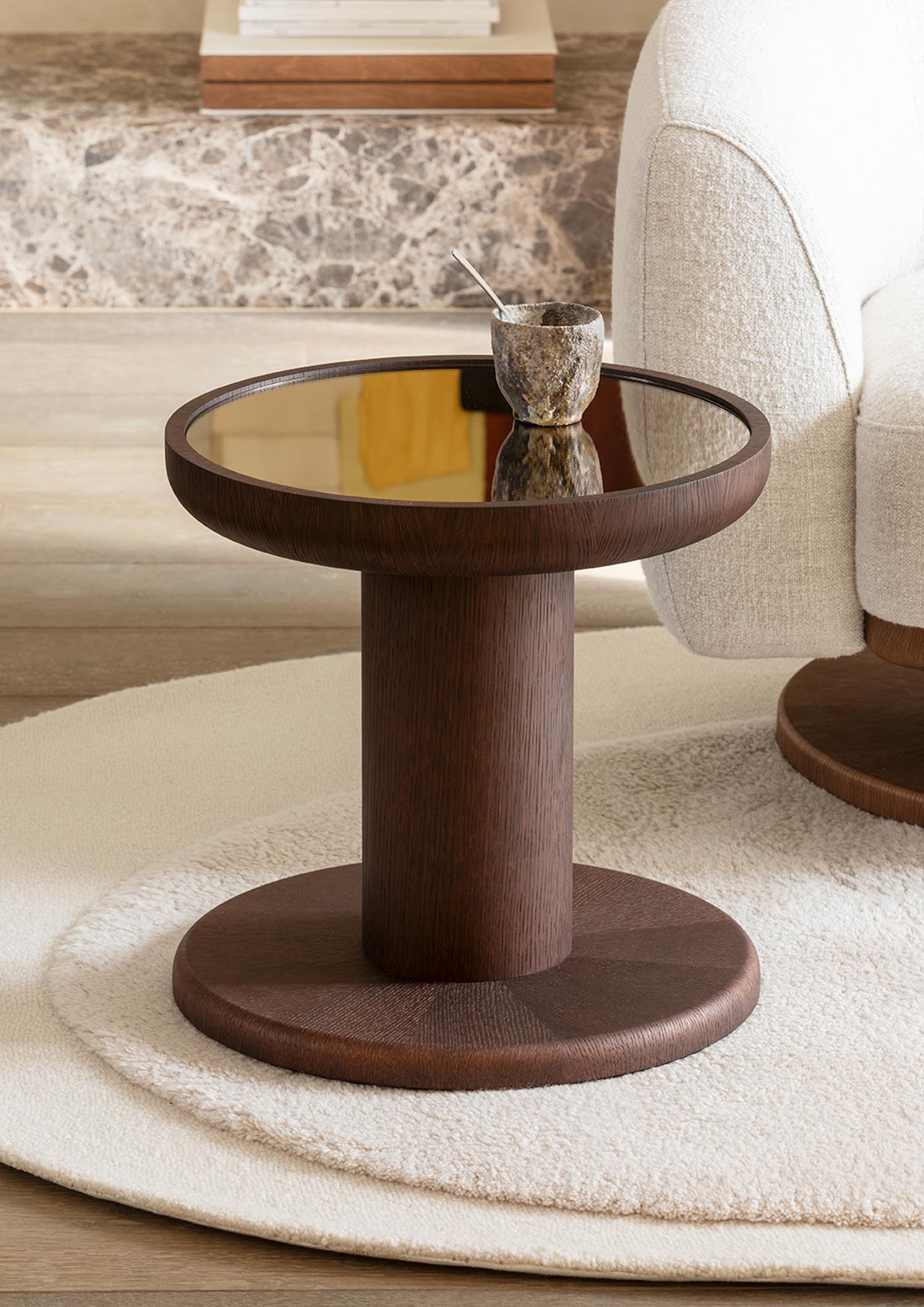
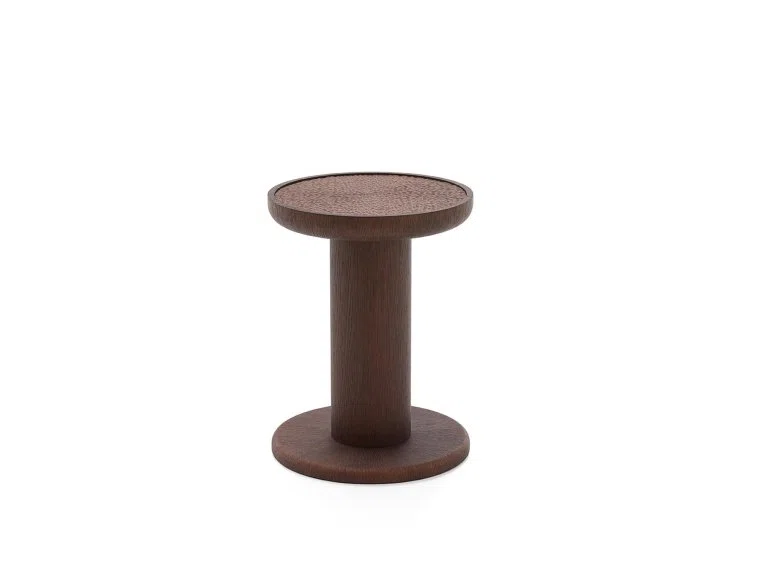
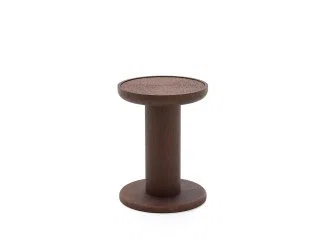
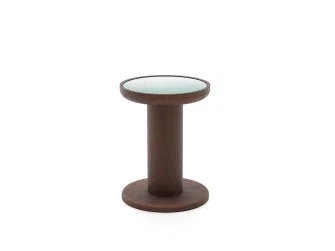
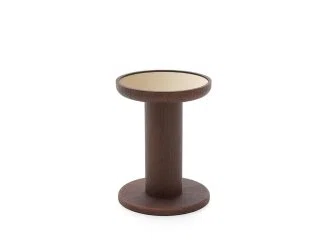
For the pedestal tables, the inserts can vary, Kozo lacquer, Glacée lacquer, or gouged oak. How did you approach this modularity?

G.G.: What is interesting is that these pieces allow for simple customization. We developed several wood finishes, and the inserts can be easily changed. The idea was to allow interior designers to reinterpret the pieces without redesigning them entirely. By adjusting finishes, inserts, or fabrics, each piece can adapt perfectly to its context. Every interior is different, and what works in one may not in another.

If this collection were to convey a single sensation?

G.G.: A sense of softness, in the lines, in the proportions, in the relationship to material. Something enveloping, warm, yet always controlled.

DISCOVER

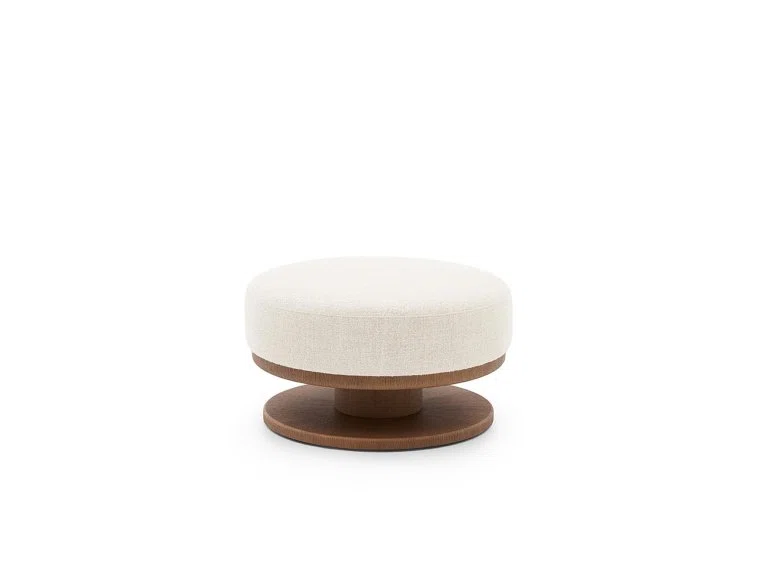
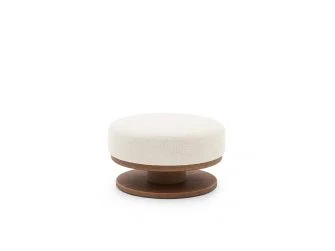
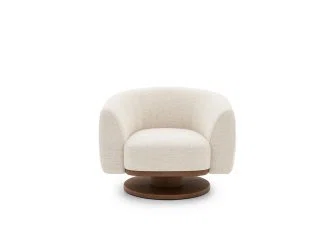
VESTA, designed by Garnier & Linker, is conceived as a cohesive ensemble, where each piece responds to the next in a balanced dialogue of forms and proportions. Bridge, armchair, pouf and pedestal tables share a common language: full, rounded volumes supported by a central wooden base, a structural and expressive signature.

You want to add this product to your wishlist ?
Login or create an account

You want to add this product to your wishlist ?
Login or create an account

You want to add this product to your wishlist ?
Login or create an account

You want to add this product to your wishlist ?
Login or create an account